
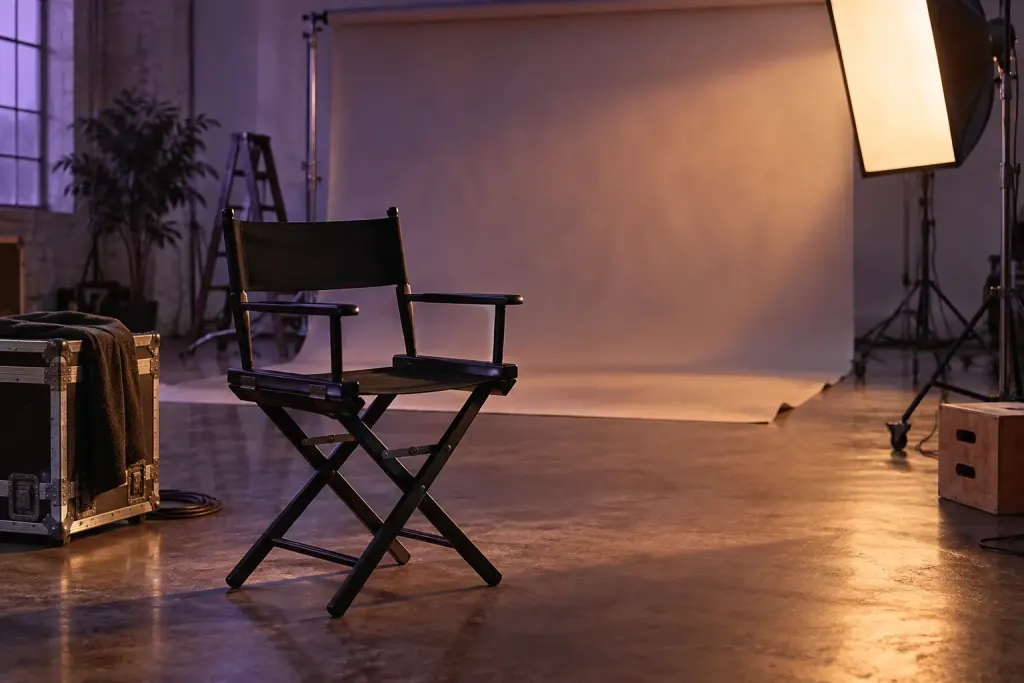
A camera faces a room. Someone enters, searches a drawer and leaves. The image remains. A second person arrives and notices the open drawer. Nothing has been explained in dialogue, yet the room has become a place where knowledge is unevenly shared.
In this invented example, the uninterrupted view matters because the audience witnesses both visits. To explore a sustained shot, follow what changes inside it instead of waiting only for the next cut.
Track one moving point of attention
At the beginning, what draws your eye? It might be a face, a bright doorway or a hand reaching for an object. Later, does movement redirect you? Does a person in the background become more important than the person closest to the camera?
Make a simple sequence of three notes: first I watched this, then this happened, then my attention moved there. You do not need precise timings unless timing is the question you want to investigate.
Distinguish camera movement from movement in the scene
The camera may stay still while performers move, or travel while a character remains the main point of reference. Try describing these separately. “The character approaches the window” and “the camera follows toward the window” are different observations.
Notice what is revealed and what disappears from view. A continuous image can still withhold information. Following one person may leave another behind, and a doorway can hide an action without any edit at all.
Consider why the waiting matters
Does watching an action unfold make it feel ordinary, uncomfortable, funny or exhausting? Compare your experience at the beginning and end of the shot. Duration alone does not guarantee tension or realism; performance, sound and the information available all contribute.
A useful closing question is: what would change if this were broken into several shorter views? Your answer is a reading of the finished film, not a claim about a director’s private intentions. For another angle, use our reaction-shot exercise to explore a scene where cuts actively move attention between people.