
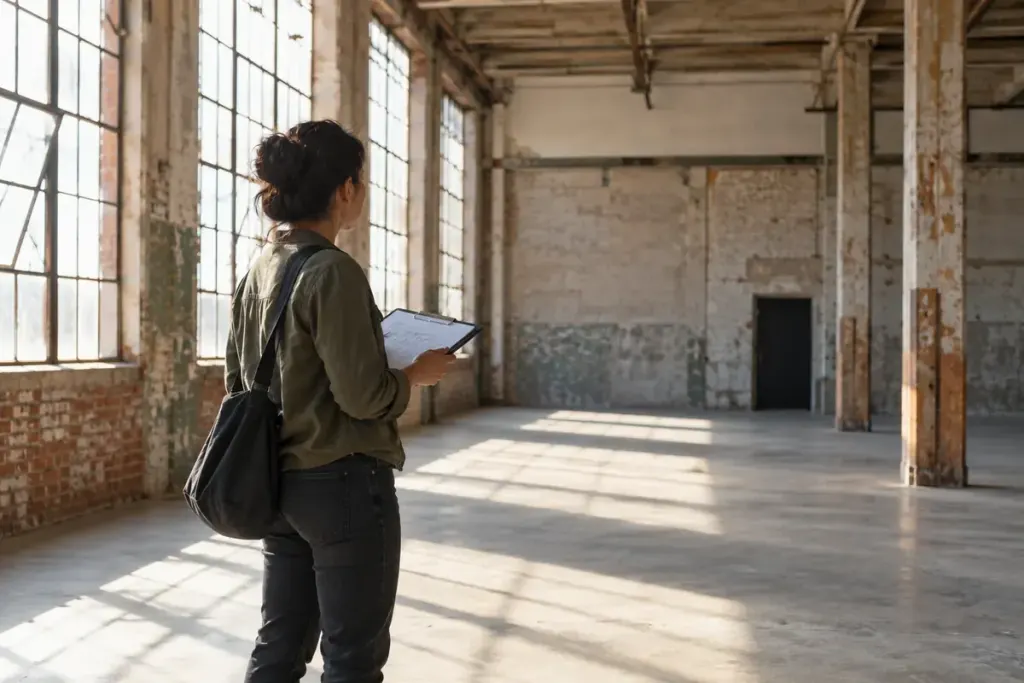
A convincing room on screen may begin with an existing building, a constructed set, or a combination of the two. The credits become easier to read when you separate the search for a workable location from the design of the film’s visual environment.
One room, several questions
Imagine an invented scene in a disused station. The story needs a long sightline, a particular period atmosphere and enough space for two characters to remain far apart. The production-design conversation concerns the setting’s visual character and the objects or alterations that support it.
Location work also involves access, permissions, resources and the practical relationship with the place. ScreenSkills’ location-manager checklist describes management of the location department, crew and suppliers. A beautiful building is not automatically available or workable for a shoot.
Read credits without assigning every decision
Pause a film’s credits and locate the location department and art department. Note the actual job titles instead of merging everyone into “the person who chose the room.” Department structures and responsibilities can vary with the production.
Then return to the station scene. List what appears to be architecture, what might be dressing and what the camera leaves unseen. Treat those as observations and questions, not proof of construction methods. A production interview or making-of record may answer them. This approach gives you a more precise appreciation of the finished setting while leaving room for work the image cannot reveal.
AI-generated editorial illustration; not a documentary photograph.