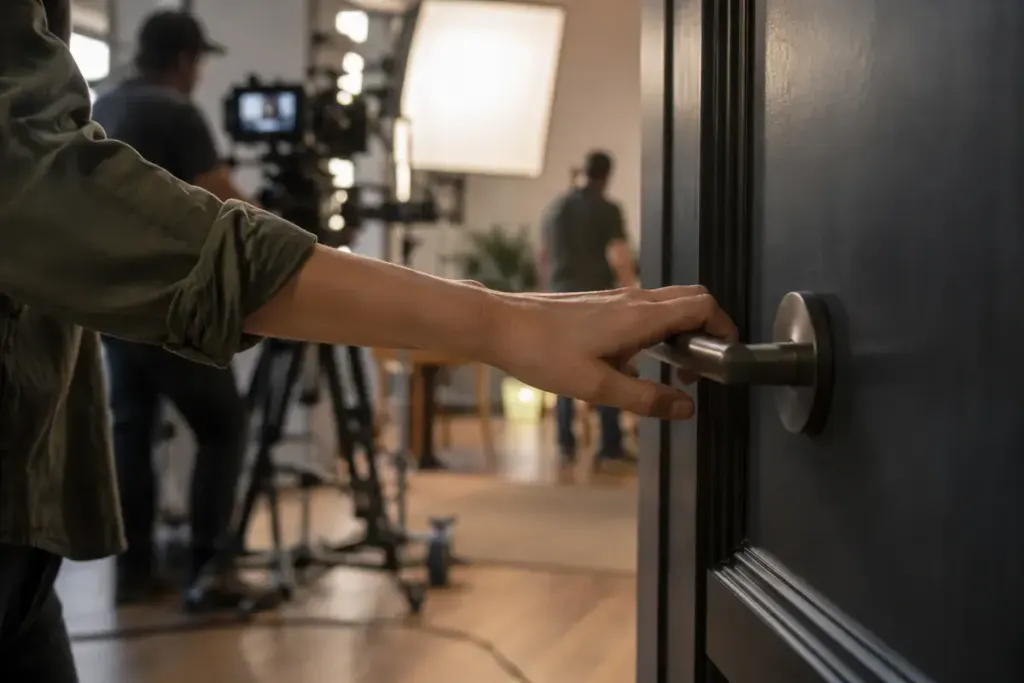
A character reaches for a door in a wide shot. The next image is closer, but the hand seems to finish the same movement. The edit is easier to accept because an action carries your attention across the cut.
Follow the moving part
For a viewing exercise, choose a brief action with a clear beginning and end: lifting a cup, turning a handle or sitting down. Watch once for the story, then again for the exact point where the shot changes. Note the hand’s position, direction and apparent speed on either side.
An edit need not reproduce every fraction of the movement to feel continuous. The important question for this exercise is what you perceive as one action, rather than whether the camera recorded an uninterrupted event.
Try a deliberately imperfect comparison
If you film your own harmless practice scene, record a wide view and a closer view of the same door opening. Make one edit while the handle turns and another after the movement has stopped. Compare where your attention goes. Keep the door, hand and direction consistent so that the cut is the main variable.
A mismatch is not automatically a mistake in a finished film. An abrupt change can be purposeful. Write down the visible discrepancy before guessing its intention: “the hand is already lower after the cut” is an observation; “the editor wanted confusion” needs further support. That distinction makes an editing notebook useful beyond simply collecting smooth and awkward cuts.
AI-generated editorial illustration; not a documentary photograph.