
You recognise a melody, but the film gives it to you through a wall, an open window or a distant room. The incomplete sound can establish a relationship between spaces before the camera reveals who is listening.
Focus first on what is audible. Perhaps the rhythm carries clearly while the words do not. Perhaps the sound grows louder when a door opens. Describe those changes without assuming you know how the soundtrack was produced.
An invented example: someone studies in one room while a neighbour repeats a song next door. The listener taps a pencil in time, then closes the window. The same musical fragment has become both a connection and an interruption through a few actions.
Choose the instant when the barrier changes: a door moves, the camera crosses a threshold, or the listener leaves. Does the music alter with the apparent position of the audience? Does the film keep it clear even after its source should seem distant? Either choice may be expressive.
Compare this with the imagined effect of a clean recording playing over the entire scene. That comparison does not identify a better soundtrack; it helps explain what the restricted sound contributes.
In a discussion, distinguish the song’s possible associations from its immediate placement. A familiar tune may carry memories, but its muffled presence also tells us about access, proximity and the limits of a character’s private space.
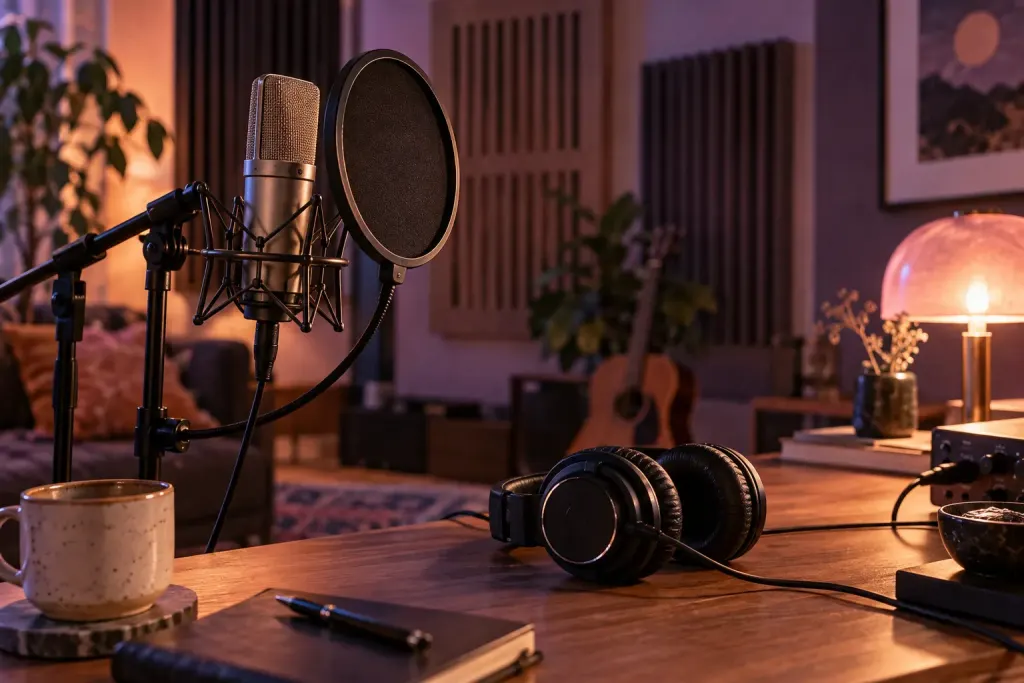
Visual note: the image illustrates the subject, not a documented event.