
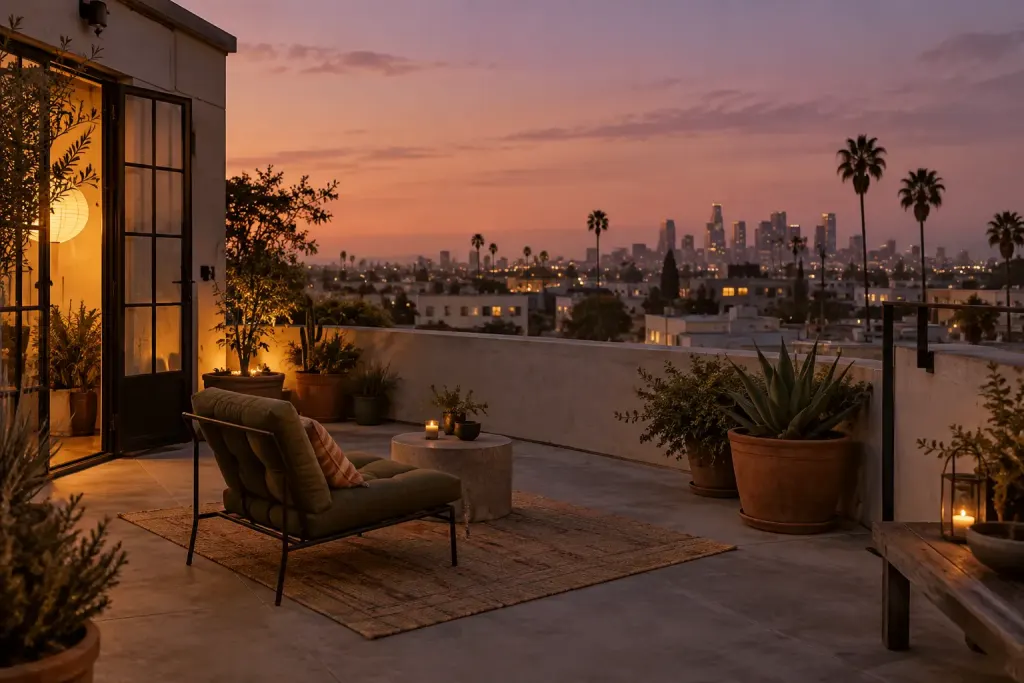
Returning to a familiar location does not always feel like returning to the same space. A room seen in daylight may later contain large dark areas or a single bright doorway. Compare two visits to one location rather than making broad claims about a film’s visual style.
Choose matching details
Find a feature visible in both scenes: a window, table, staircase, or wall. Describe what you can see around it each time. Note where faces remain readable and where information becomes harder to pick out.
Keep changes in framing separate from changes in light. A closer camera position can remove part of the room even when its illumination has barely changed. Likewise, a different character position may account for a face being less visible.
Connect the image to your experience
Ask what each visit allows you to anticipate. Can you see where someone might enter? Is an object now easier to notice? These questions produce more precise observations than assigning a fixed meaning to brightness or darkness.
Write a short comparison with one visible detail from each scene. If you describe the later visit as uneasy or intimate, mark that as your response. The evidence supports a reading of this particular sequence, not a universal rule about how lighting must affect every viewer.