Visual Storytelling
A Shared Frame Makes You Choose Whose Reaction to Watch
Watch a conversation that keeps both people visible and compare the speaker’s gestures with the listener’s simultaneous reactions.

Watch a conversation that keeps both people visible and compare the speaker’s gestures with the listener’s simultaneous reactions.
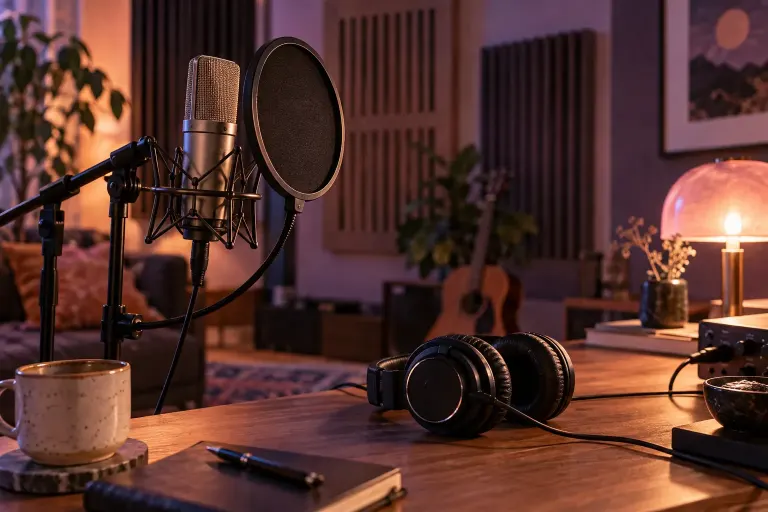
Listen to overlapping dialogue for shifts in attention, unfinished phrases and reactions without assuming every word must be equally clear.

Watch an overhead shot for paths, spacing and the placement of objects, then compare what becomes harder to read from above.
Footsteps, voices or an engine can suggest changing distance before their source appears. Follow the sound’s development and compare it with the eventual image.
Follow an offscreen glance and the next image in a film scene. Learn to separate a character’s visible look from the connection you infer between shots.
When a film shows a television or monitor, notice the inner screen, the surrounding room and the person watching. Three observations can open a richer scene discussion.
Watch a scene shift attention from foreground to background through changing focus, then describe what you saw without guessing how the shot was produced.
A repeated composition can make a small change stand out. Compare two appearances of a film image through framing, duration, action and sound.